
Toilet 2.0
Swachh Shauchalaya Resource Hub
From Planning to Maintenance of Public & Community Toilets
With rapid urbanization, expansion of municipal boundaries and changing lifestyles that see people spending more time outdoors, the demand for new public toilets has grown significantly. At the same time, many existing toilets face operational challenges ranging from lack of cleanliness, inadequate caretaking, recurring maintenance costs, safety concerns, lack of community ownership and vandalism. Simultaneously, improved access to Individual Household Toilets has led to the abandonment of many community toilets, now lying unused or in disrepair.
Recognizing these evolving needs, Swachh Bharat Mission – Urban 2.0 (SBM-U 2.0) has developed Swachh Shauchalaya Resource Hub - a one-stop platform offering practical tools and guidance to Urban Local Bodies (ULBs).
What the Hub Offers
This hub offers step by step guidance across the full toilet lifecycle from planning and design to daily operations and monitoring. The portal is organized around five core stages: - 1) Data Enumeration 2) Planning & Retrofitting 3) Operational Models 4) Toilet Visibility and 5) Ensure Clean Toilets.
The hub also provides Public Toilet Design Portal with construction-ready public and community toilet designs, complete drawings, technical specifications, and BoQs.

ENUMERATION OF EXISTING INFRASTRUCTURE
This is a mandatory step that every ULB should undertake annually or atleast once in two years to enumerate every public and community toilet in their jurisdiction. Such an inventory of data helps the ULB be cognizant of number of public and community toilets and urinals in the city/town, its location, and its operational condition. The data will help ULB plan improvements, track performance, and manage service providers. This step is a prerequisite to diagnose any issues with public and community toilets in the city/town especially such as poor cleanliness and lack of maintenance.
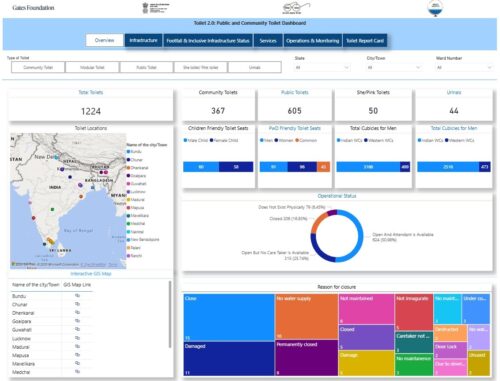
Click here to view the dashborad
PRELIMINARY DEMAND ASSESSMENT
For preliminary planning and budgeting purposes, it is recommended to estimate toilet seats by comparing the number of functional seats against the floating population. However, this gives only a broad picture—detailed, local-level spatial assessments are essential before siting or upgrading toilets to avoid underuse or misplacement.
- Seats Calculator – ULB level Demand Assessment
DEMAND ASSESSMENT
The spatial demand assessment integrates three layers of information to accurately identify areas requiring intervention — (i) seat utilization assessment of existing toilets, (ii) mapping of high activity areas, and (iii) mapping of Open Urination (OU) and Open Defecation (OD) hotspots, wherever present. This analysis is further supported through GIS-based activity mapping and seat utilization assessment of the existing infrastructure. Planning Tool: A Guide to Locate New Public Toilets serves as a guidance document that shall aid ULBs to site new public toilets via a systematic and structured approach that ensures both adequate number of toilet seats and appropriate spatial distribution.
CITIZEN VALIDATION SURVEYS
This step uses structured surveys to engage with residents and gather feedback on preferred toilet locations and accessibility needs. This ensures that proposed sites match user needs.
SITING & SIZING
This step helps to identify suitable locations, and the number of toilet seats to be provided based on footfall and user demand.
- Footfall Assessment mechanisms:
LEVERAGE EXISTING INFRASTRUCTURE FOR SHARED ACCESS
ULB can expand toilet coverage without new construction by partnering with Private or Government Institutional Establishments (Fuel Stations, Court Complexes, etc.), subject to feasibility & safety. This is applicable especially in areas where land is scarce and demand for access to toilet is high.
However a format agreement recommended to be established to ensure service standards (Sample Agreement)
SITE SELECTION CHECKLIST
This step uses a standardized field checklist to evaluate shortlisted sites for critical infrastructure like water and drainage access, lighting, visibility, security, and overall spatial feasibility.
UPGRADATION OF EXISTING TOILET TO ASPIRATIONAL TOILET
ULBs can upgrade existing toilets to meet aspirational standards through rehabilitation. Accessing the national funding of ₹2.5 lakh per seat requires complete demolition and reconstruction. ULBs may choose to improve existing facilities using their own funds or CSR contributions, where full rebuilding is not feasible or necessary.
DESIGN GUIDELINES
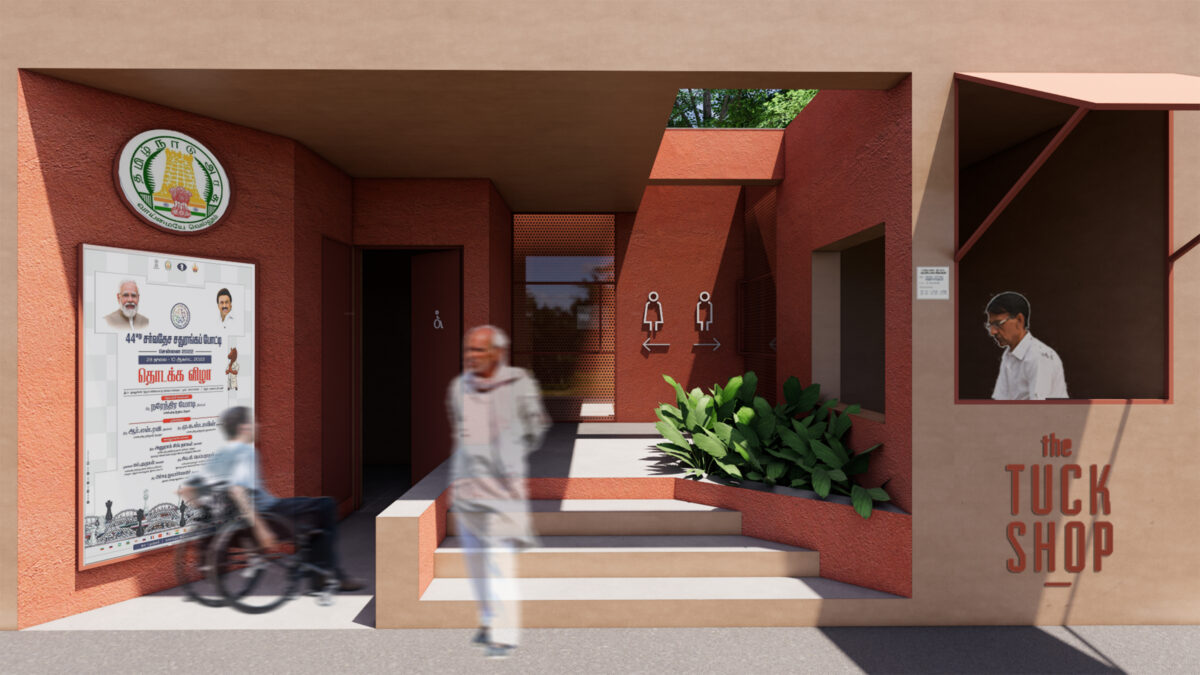
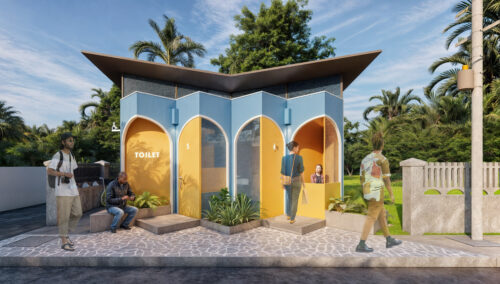
Design toilets aligned with national standards, such as those from CPHEEO and MoHUA. ULBs can select from standard design templates or a curated repository of typologies that include layout plans, cost estimates, and urban-specific adaptations, compiled in Not Just Toilet by MoHUA. Finalized designs must ensure accessibility, gender inclusion, and user safety.
- Design Features in Aspirational Toilets
- Mandatory & Recommended Infrastructure Features in Aspirational and Regular Public Toilets
- Design Specifications and Space Standards for Public Toilets
- Public Toilet Design Portal (Standard Design & Estimates)
FUND MOBILIZATION
Explore Central and State budget allocations, CSR support, and own sources to fund construction of new construction-
Under SBM 2.0, ULBs receive funding for New Construction i.e.,
- ₹1.5 lakhs per seat for community/public toilets,
- ₹2.5 lakhs per seat for aspirational toilets and
- ₹0.32 lakhs per seat for Urinals
Gap Funding: Explore Viability Gap Funding (VGF), CSR contributions, bank loans, and dedicated ULB cess where project costs exceed grants.
PPP Models: Explore Public-Private Partnerships especially for a cluster of toilets or an aspirational toilet. Ensure minimum 5-year maintenance contracts for all SBM-funded facilities.
Additional support is received for Heritage/high-footfall areas, if justified.
CONTRACTING MODELS
This step helps ULBs choose the right implementation model, including partnerships with private operators. It may also offer options for revenue generation through kiosks or advertisements. This step also provides contracts by clearly defining roles, cleaning frequency, and complaint resolution timeline
- Types of Contracting Agreements
- O&M On-ground Best Practices
QUALITY CHECKS
Quality Checks by ULB are essential to ensure quality of construction and also completion of the project on schedule.
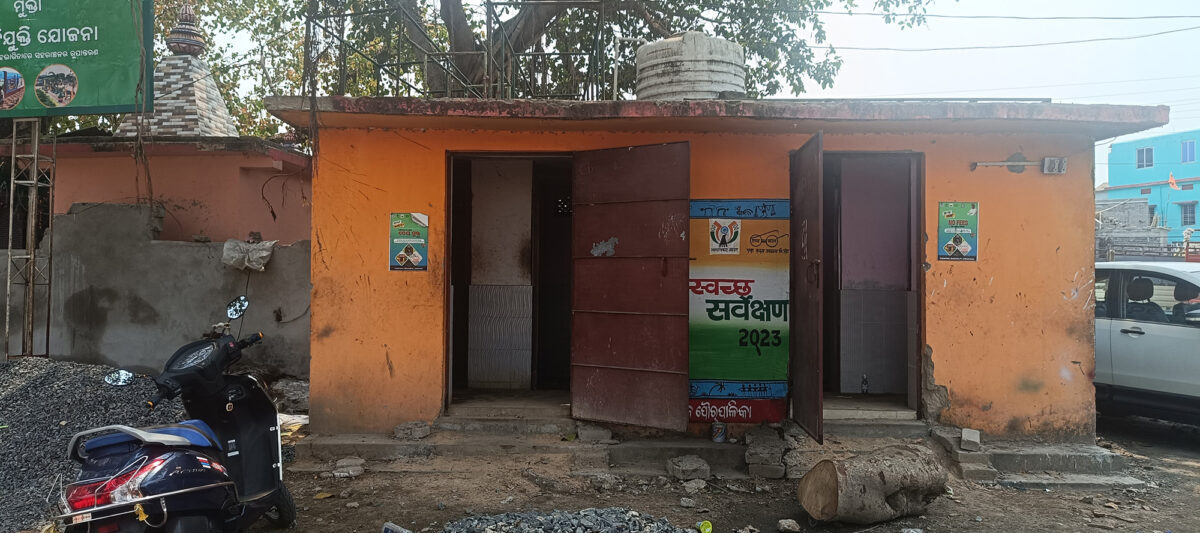
SITUATION ASSESSMENT
Asses the current condition and usage of public/community toilets:
- Functionality Assessment – Reviews infrastructure, cleanliness, safety, and service delivery to identify repair and retrofitting needs.
- Seat Utilization Assessment – Compare footfall with available seats using CPHEEO norms to check for adequacy, especially during peak hours.
Based on findings, facilities may be repaired, upgraded, depending on demand and ULB priorities.
- Functionality Assessment - Mandatory & Recommended Infrastructure
- Seat Utilization Assessment
- Checklist for Repairs
BOQs FOR RETROFITTING / EXPANSION
Based on the assessment, plan upgrades to make toilets safer, inclusive, and user-friendly such as adding ramps, feedback systems, etc., and prepare BOQs for necessary repairs.
FUND MOBILIZATION FOR RETROFITTING EXISTING TOILETS
Retrofitting of existing insanitary toilets is a priority under SBM-U 2.0. ULBs must identify such units and provide technical and financial assistance to convert them into sanitary toilets with safe containment. ULBs are advised to explore Corporate Social Responsibility (CSR) and Alternative Financing Options to bridge funding gaps.
For reconstruction public/community toilets (pre-2014 built) at the same site, SBM-U 2.0 provides funds at ₹1.5 lakhs/seat for CT/PT, ₹2.5 lakhs/seat for AT, ₹0.32 lakhs/seat for Urinals, and refurbishment/ upgradation to ATs (up to 50% of new construction cost).
CONTRACTING OUT REPAIR
With plans, BOQs and funds ready, develop contract, issue work orders with defined roles to ensure timely, quality execution of repairs and upgrades.
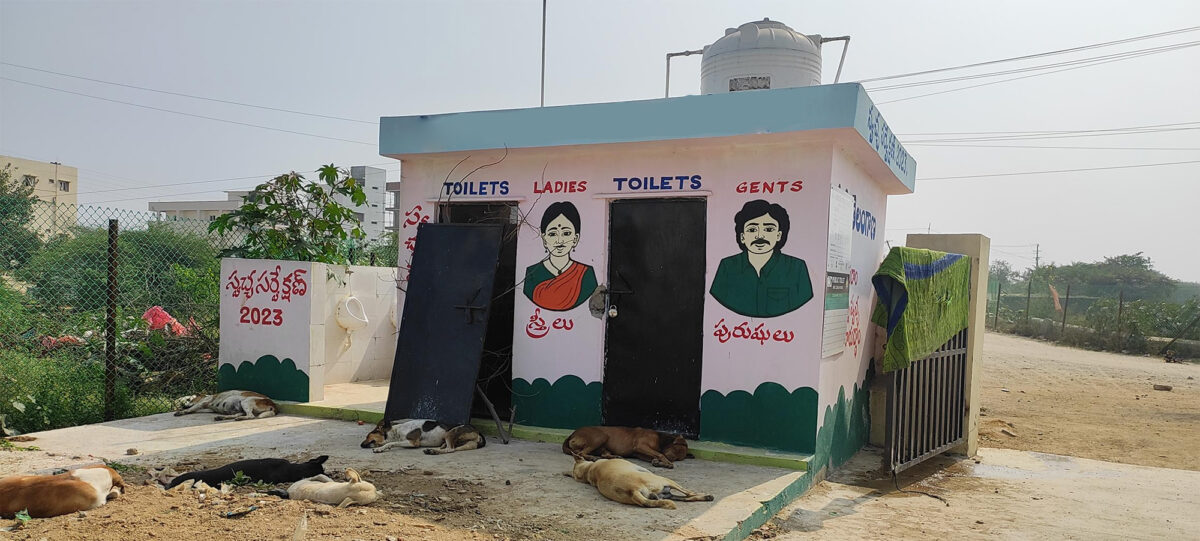
SITUATION ASSESSMENT & ACTION
Using the information obtained under Data Enumeration, asses the reasons and duration of closure. Based on the findings either revive or repurpose the site.
REVIVAL OF CLOSED TOILET
In case of revival, follow the steps under Existing Toilet upgrade the facility. If demand exists but structure is unfit, demolish and rebuild as per New Toilet design and sizing guidelines.
REPURPOSING THE SITE
ULBs are encouraged to explore opportunities to repurpose these spaces to broader development needs such as:
- Sanitation workers rest areas: Develop designated shelters with seating, water, and storage for cleaning tools, PPE, and personal belongings.
- Skill training and Micro-enterprise spaces: Convert sites into centers for vocational training or micro-enterprises aligned with initiatives like DAY-NULM (e.g. sanitary pad production, tailoring, etc).
- Livelihood hubs for Urban SHGs or Women Collectives: Establish spaces for community-operated pay-and-use canteens that support local women's collectives.
- Community spaces: Transform facilities into community centers, libraries, or exhibition spaces to foster social cohesion.

SELECT A SUITABLE OPERATION MODEL
Identify the O&M cost drivers and explore various management options—ULB-run, contractor-led, PPP, or CBO-managed models—based on your city’s capacity. Identify ways to improve financial sustainability through various revenue generating options including user charges, ads, kiosk rentals, and CSR.
- List of O&M Cost drivers
- Toilet 2.0 Cases that show how diversified income can support toilet upkeep.

ALLOCATE MUNICIPAL BUDGET FOR O&M
Ensure consistent and timely budget provision annually from ULB funds towards Public and Community Toilet O&M, especially for toilets where pay and use and revenue from other sources is not feasible.

DEFINE ROLES & RESPONSIBILITIES & ESTABLISH CONTRACT AGREEMENTS
Set clear accountability for daily cleaning, grievance redressal, monitoring, and periodic maintenance, define responsibility of repairs, restocking of consumables, etc and establish contract agreements.

SIGNAGE & GEOTAGGING: ENHANCING TOILET VISIBILITY
One of the most common reasons people don’t use public toilets is that they cannot find them. ULBs should prioritize clear signage and digital mapping from the planning stage to improve visibility, increase usage, and reduce open defecation. Strategic wayfinding through physical signs at key locations and geotagging on platforms like Google Maps and Swachhatam Portal boosts access, service delivery, and citizen satisfaction.
- Refer Chapter 5 of Harmonised Guidelines & Standards for Universal Accessibility in India
- Step by Step procedure for Mapping Public Toilets
ENFORCE SERVICE LEVEL AGREEMENTS
Building on the “Establish Contract” step, ULBs must set clear Service Level Agreements (SLAs) with service providers. Without them, maintenance becomes ad hoc, leading to disrepair and reduced user trust. SLAs outlines:
- Specific performance standards for cleaning, maintenance, and repair - Model Service Level Agreements based on Toilet Category
- Clarity on Roles and Responsibilities
- Penalties for Non-compliance

OPERATOR TRAINING
This step ensures that all staff managing public toilets are trained on cleaning protocols, minor repairs, user interaction, safety, and record-keeping. Regular training helps maintain service quality and ensures toilets are clean, safe, and well-managed every day.

CITIZEN FEEDBACK MECHANISM
A functional feedback system allows users to report issues, share suggestions, and rate their experience. Check if users can easily share feedback through a complaint register, feedback machine, QR code, or helpline. Make sure the system is working, clearly visible, and checked regularly by staff, to help ULBs fix problems quickly and improve toilet services based on user input. Below are some examples of on ground Citizen Feedback Mechanism in practice:

MONITORING
This step ensures regular checks on toilet cleanliness, functionality, and service quality. Regular monitoring is critical role in enforcing the recommended standards,
helping to maintain the facilities in good condition and safeguard public health. As many ULBs lack a structured system to monitor and maintain public/community toilets regularly, a formalized monitoring system is therefore advised to maintain desired service levels, allowing for timely interventions and improvements. Monitoring Tool for Public and Community Toilets provides ULBs with an approach to effectively monitor and manage public/community toilets and urinals. Monitoring can be done through periodic inspections, user feedbacks, and digital tools to track performance and address issues quickly, helping maintain consistent standards over time.
- Periodic Monitoring Questionnaire & Service Level Agreement (SLA) Compliance Report
- Case Studies on Monitoring
At the ULB level, monitoring data can be integrated into platforms like the Swachhatam Portal. Examples from Telangana and Lucknow show how such systems highlight issues—like water shortages, poor cleanliness, and broken fixtures—supporting targeted maintenance and better service delivery.

IEC & SBC
This step focuses on creating awareness and encouraging responsible toilet use through Information, Education, and Communication (IEC). It includes user manuals, do’s and don’ts, and applying branding as per Swachh Survekshan toolkit guidelines to improve visibility, consistency, and user engagement.